 0
0
 0
0
Internet slang term narrowly beats “Peak” and “Crashout” in Langenscheidt’s annual youth language poll
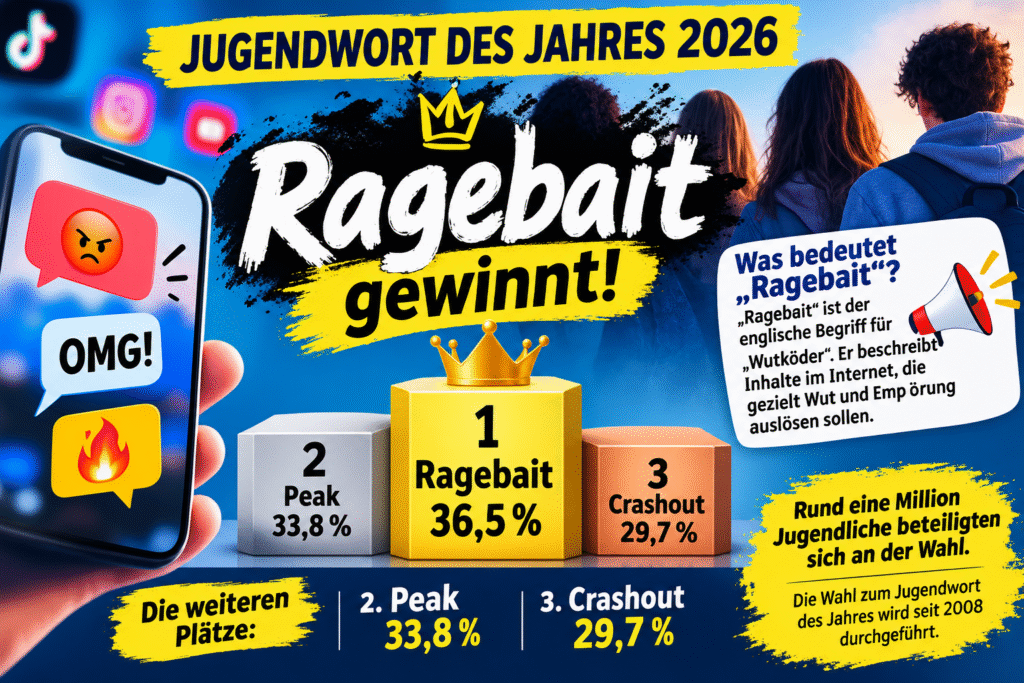
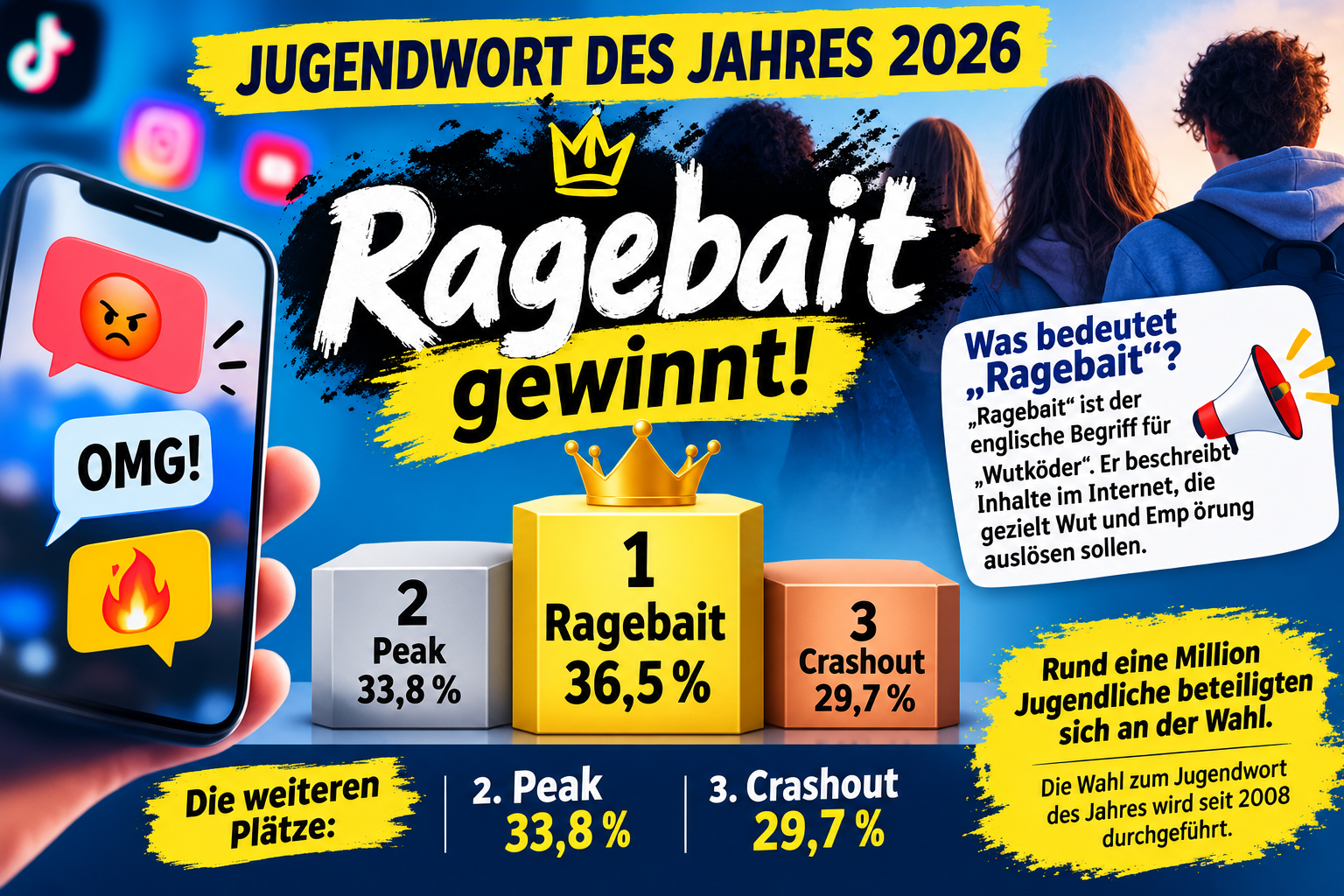
“Ragebait” has been named Youth Word of the Year 2026, narrowly defeating the terms “Peak” and “Crashout” in an online vote organised by German publishing house Langenscheidt.
The result was announced on Saturday at the Frankfurt Book Fair, with “Ragebait” securing 36.5 per cent of the votes. The competition was remarkably close, with “Peak” finishing second with 33.8 per cent and “Crashout” taking third place with 29.7 per cent.
What Does “Ragebait” Mean?
The English term “Ragebait” can be translated literally as “anger bait.” It describes online content deliberately designed to provoke anger, outrage or heated reactions among viewers and readers.
Such content is commonly found on social media platforms, where provocative statements, misleading claims or deliberately absurd opinions can quickly trigger arguments and generate widespread attention.
The strategy behind ragebait is straightforward: provoke an emotional response to increase engagement and reach. The more people react, comment on, share or argue about a post, the greater its potential visibility online.
The term reflects growing awareness of how online content creators can exploit anger and controversy to attract attention, boost engagement and potentially increase their audience.
A Close Contest for the Top Spot
The final results highlight the popularity of all three expressions among young people.
“Ragebait” won with 36.5 per cent of the vote, followed by “Peak” with 33.8 per cent. “Crashout” received 29.7 per cent.
The two runners-up have distinct meanings in contemporary youth slang. “Peak,” derived from the English word for the highest point of something, is used to describe something exceptional or the very best.
“Crashout,” meanwhile, refers to someone who loses control of their emotions and reacts impulsively or explosively, sometimes with serious consequences.
Around One Million Young People Took Part
Langenscheidt did not disclose the exact number of participants in the final voting round. However, the publisher reported that approximately one million young people had taken part in the overall campaign this year.
The annual Youth Word of the Year election has been held since 2008 and has become a widely recognised reflection of changing youth language and internet culture in Germany and in other German sepaking countries..
Young people and young adults aged between 11 and 20 were eligible to participate in the vote.
Last year’s winning expression was “das crazy,” a casual phrase often used as an alternative to “okay” or as a reaction to surprising or unusual situations.
What the Winning Word Says About Online Culture
The selection of “Ragebait” highlights the growing influence of social media on everyday language and the way young people interpret online behaviour.
As digital platforms increasingly reward engagement, content designed to provoke strong emotional reactions has become a familiar part of internet culture. The term gives young people a concise way to identify and discuss this tactic.
Its victory also serves as a reminder to internet users to approach provocative posts critically and consider whether content is intended to inform, entertain or simply make people angry.
With “Ragebait” taking the top spot, 2026 Youth Word of the Year reflects not only a linguistic trend but also a broader conversation about attention, emotional reactions and the power of social media.
- source: vienna.at/picture: chatgpt.com



This post has already been read 265 times!